
Digital Marketing Updates You Should Know
Welcome to your go-to source for the latest digital marketing updates in 2026! In this ever-evolving industry, staying ahead of trends, algorithm changes, and new strategies is essential for marketers, business owners, and content creators alike.
This blog will be regularly updated with quick, actionable insights on everything from SEO shifts and social media trends to AI-driven marketing innovations and paid advertising updates. Whether it’s a new Google algorithm rollout, a breakthrough in influencer marketing, or fresh tactics for boosting conversions, you’ll find bite-sized, need-to-know updates right here.
Bookmark this page and check back often to stay ahead in the fast-paced world of digital marketing!🚀
Digital Marketing Updates 2026

Did you lose rankings on Google recently?
September 2026, Search
Google finished rolling out their latest spam update late August. And their target – mass produced AI-generated content.
That’s not to say all AI-generated content has been penalised; their focus has been to stop the frustration of AI slop taking over search results. Curious about how they decide what AI content is fine and what is spam? Read about their Scalable Cluster Termination System.
While a lot of AI content has dropped in rankings with the latest update, large publications are finding that content written by AI, but with human review hasn’t been impacted.
Standing out in an era of AI space junk
August 2025, Social Media
By Amira Bird
Artificial intelligence, or more accurately, extreme machine learning, has lowered the barrier to entry for content creation, from social posts to YouTube videos to blogs.
The problem is, as people, we no longer want to sift through the space junk to find authentic, accurate, expert-led content. So, we’re getting sharper at spotting the tells. Brands are finding that Gen Z can spot AI in images even when the brands themselves can’t: one saw a 40% drop in ad click-through rate after swapping full-suite photography for AI-augmented product photos.
So, how can you stand out?
- Start with the basics.
Get your branding solid. Know your topic, your expertise, and your audience.
- In creation, use real team and people imagery and video.
On social media especially, a generic AI caption or glossy AI image is obvious.
- Use AI to extend your creative work.
Not to venture into territory where you can’t judge whether the output is any good.
Clever, creative marketing has always stood out over basic marketing. And now, that distinction has become even more important.
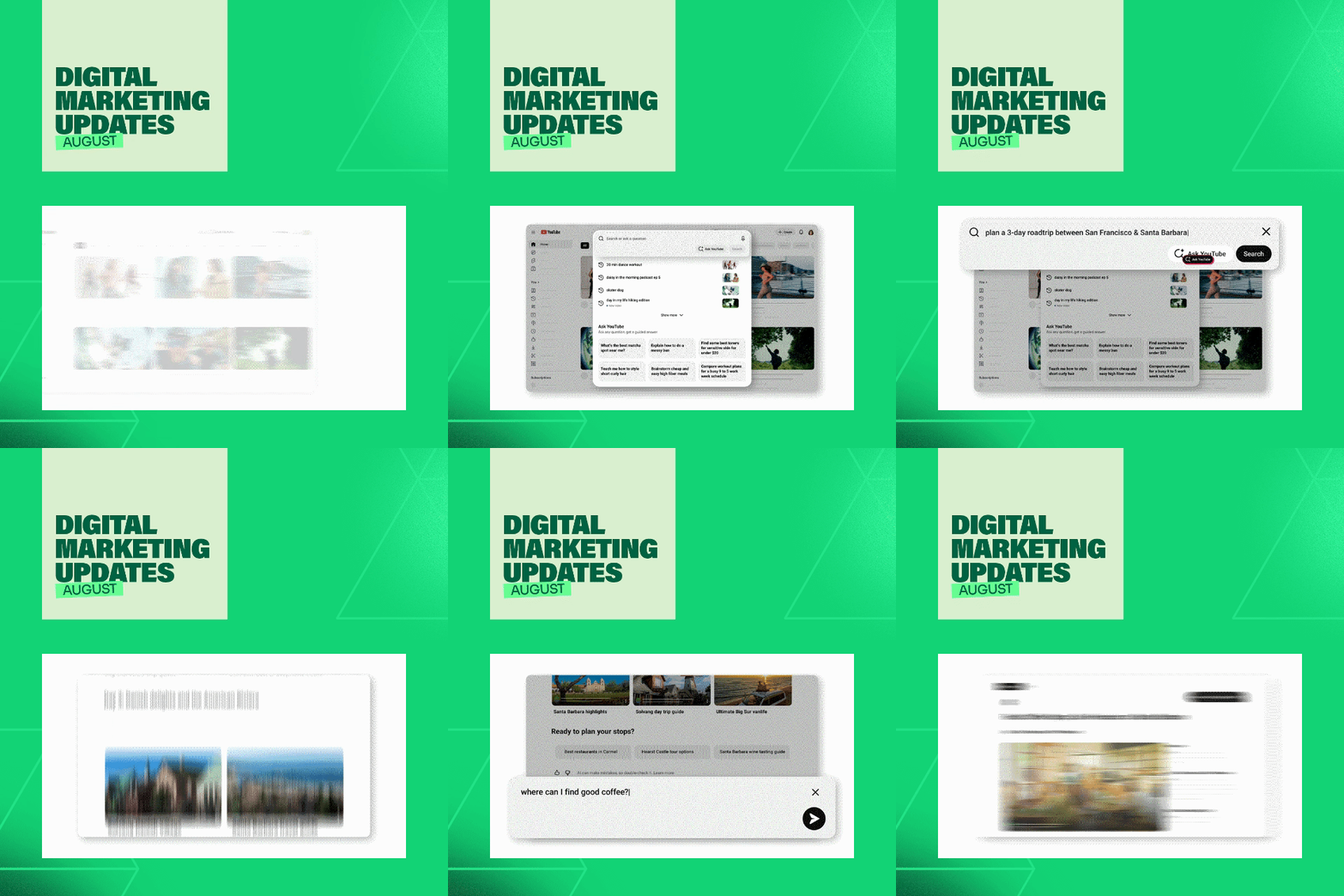
Ask YouTube
August 2026, AI & Search
By Amira Bird
YouTube is experimenting with conversational search. But what does this actually mean?
Ask YouTube utilises Gemini AI and is built directly into the platform itself. It is designed to replace keyword search with conversational queries (questions, long-tail searches & follow-up questions). The best thing about this is that it sends you to the video segment you’re looking for rather than just the most optimised video as a whole.
For searchers, this gives more appropriate and direct answers to their search. But reduces the discovery that is currently possible in YouTube.
For marketers, this changes how we optimise our YouTube videos. It’s no longer just about optimising video descriptions; the content in the video (such as captions) becomes more important, as does optimising chapters.
Image credit: Google Support
Microsoft Clarity doubles down on AI measurement
July 2026, AI & Analytics
Amira Bird
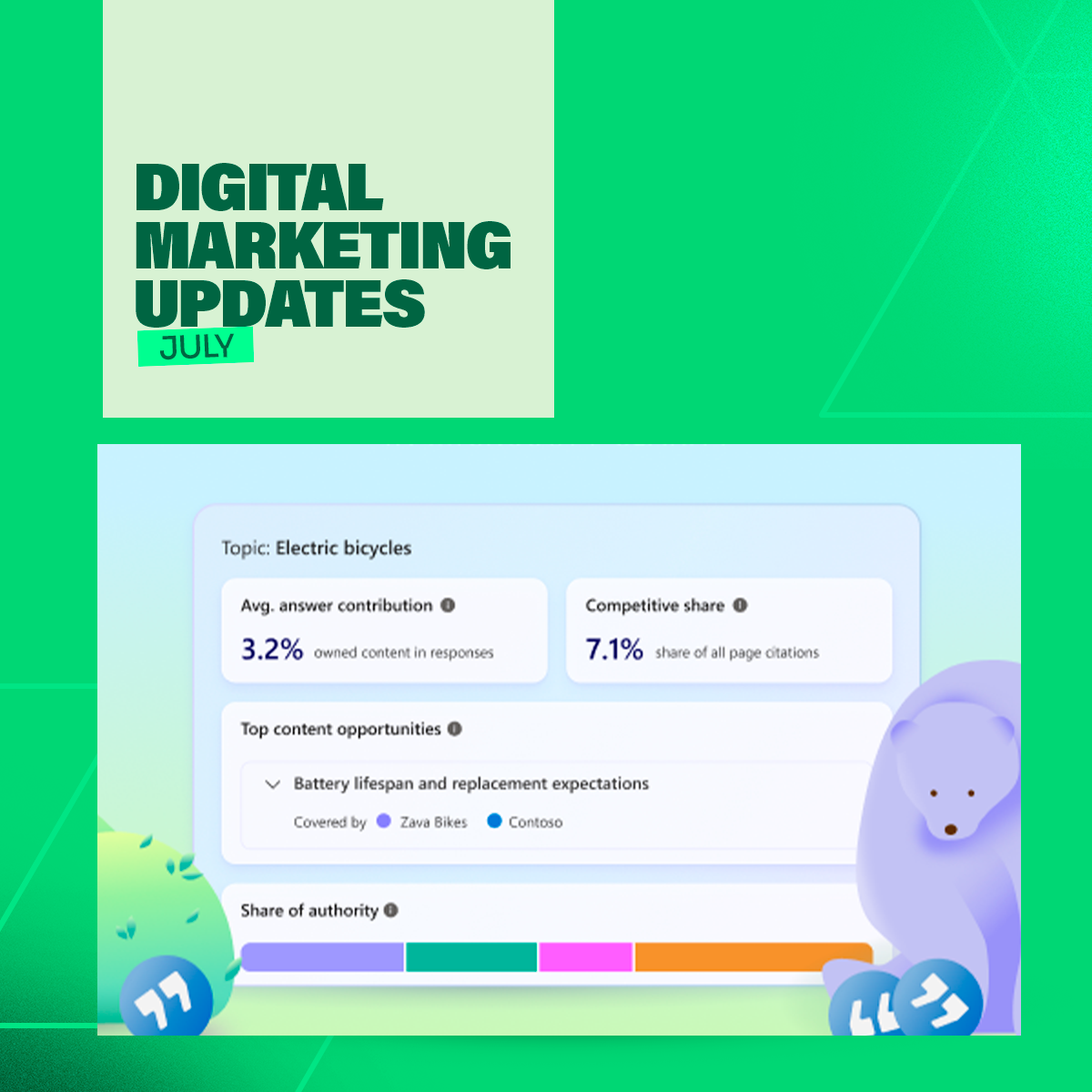
The race to measure AI visibility is heating up, and Microsoft Clarity is making it clear it wants a seat at the table. Its new Topic Insights feature expands AI reporting beyond simple citation tracking, grouping AI queries into themes so marketers can see which topics their content is influencing, where competitors are being referenced, and where opportunities exist to build authority.
The bigger story, however, is Microsoft’s ambition. At a time when many marketers are exploring alternatives to Google’s ecosystem, Microsoft is quietly expanding Clarity from a free heatmap tool into a broader measurement platform. AI reporting, user behaviour analysis and website performance insights are all beginning to live under one roof, making Clarity an increasingly compelling addition to the modern marketing stack.
Google still dominates the analytics landscape, but Microsoft is moving quickly to carve out its own space, especially as measuring AI discovery becomes just as important as measuring search rankings.
Finally, some quantifiable data on GEO visibility
July 2026, AI & Analytics
Amira Bird
As a marketer, a big problem I’ve had with AI tools is the lack of access to data we have to measure ROI, or test efficacy for our efforts. So many tools are charging over $100 per month for you to track visibility on specific search queries. But in reality, GEO searches don’t work the same way as Google searches.
Now, we seem to be getting closer to real trackable data with Google‘s Search Console now measuring link impressions to your website from AI Overviews or AI Mode search results.
While this doesn’t cover mentions, it’s a big step in the right direction. And, starting to set a standard for other LLMs to catch up to.
More robust targeting for ChatGPT Ads?
July 2026, AI & Paid Advertising
Amira Bird
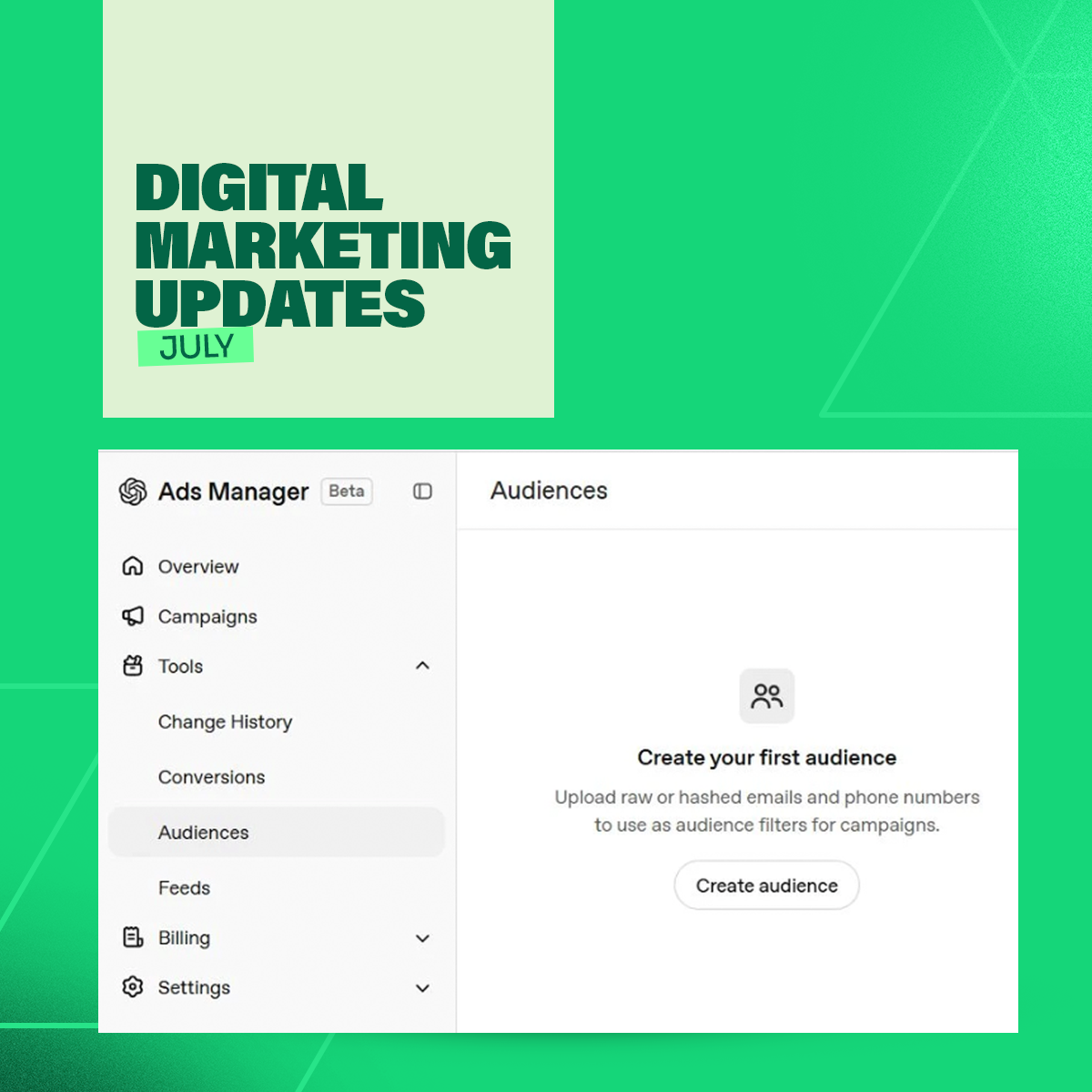
Last month we saw the roll out of advertising for ChatGPT (to free and go accounts) start. Now, less than a month later marketers are already seeing updates to the platform to allow for better targeting. Specifically, the ability to upload customer lists and retarget them through Chat GPT.
While this doesn’t mitigate the limitations of reaching people who pay for a version of the LLM, it does indicate a quick desire to catch up to other advertising platforms (such as Google Ads and Meta Ads), as well as an interesting opportunity for businesses with solid lead capture funnels or repeat purchase potential.
Unsurprisingly, ads have landed for LLMs
June 2026, AI & Paid Advertising
Amira Bird
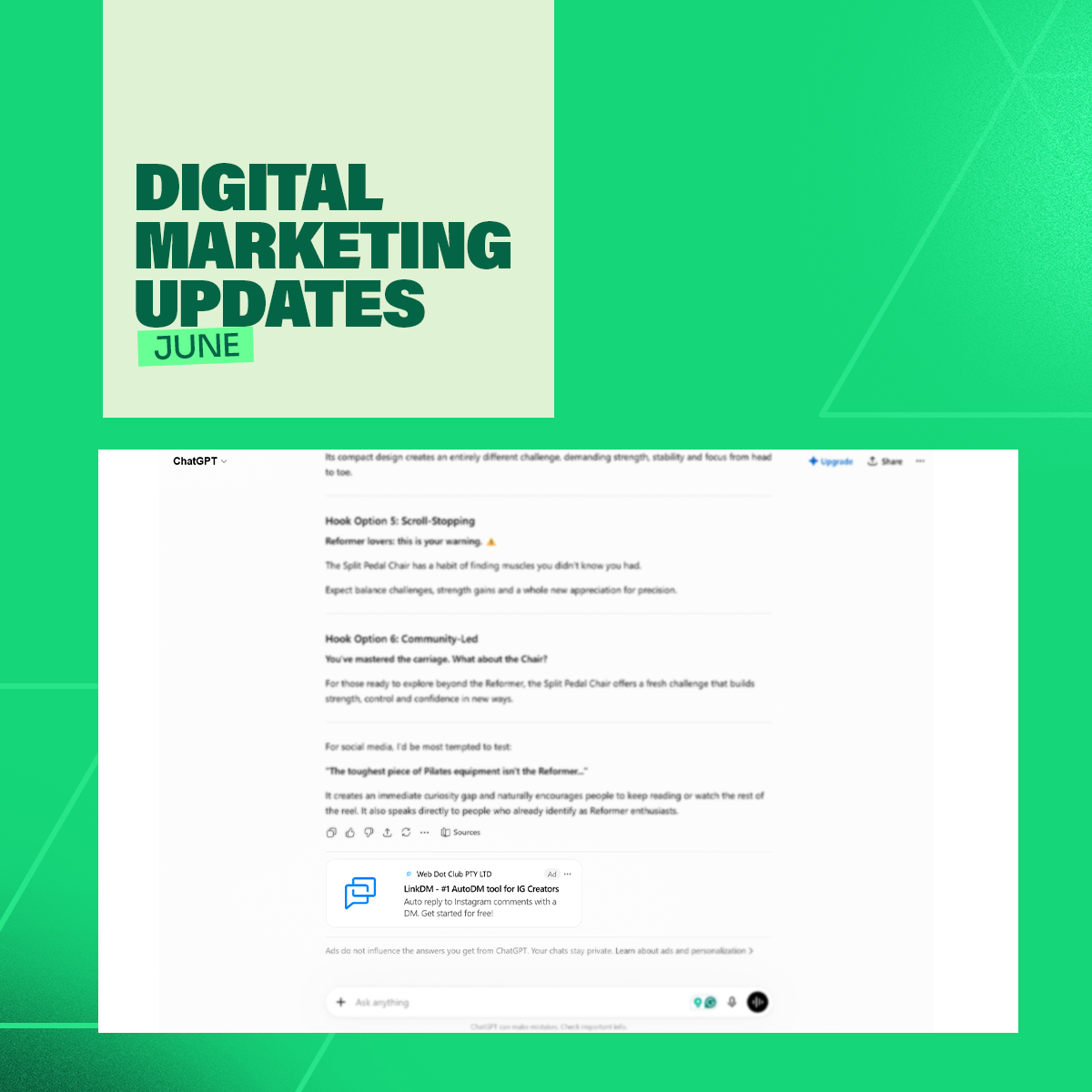
OpenAI has begun rolling out ads inside ChatGPT for users on the Free and Go plans. Testing started for logged-in adults in the U.S., with ads appearing at the bottom of answers when there’s a relevant sponsored product or service based on your current conversation.
Honestly? We’re not surprised. This is exactly how the big data players make their money – think Meta, think Google Ads. Free access has never really been free, and ChatGPT was always going to need a revenue model beyond subscriptions.
What does this mean for marketers?
There’s a genuine opportunity here, but it’s an early-stage one. OpenAI says ads won’t influence the answers ChatGPT gives, and conversations stay private from advertisers. So don’t expect anything close to Google-style keyword targeting. Right now, this is closer to topic-based contextual targeting than search-term precision, similar to how Search ads matched broad themes before granular controls existed.
And of course, there’s the catch: Plus, Pro, Business, and Enterprise subscribers won’t see ads at all. So, your addressable audience is limited to the free crowd. The same trade-off Spotify ads have always faced, where the moment someone upgrades, your reach disappears.
Our advice for this update:
- Don’t expect granular targeting yet – think topic relevance, not search intent.
- Keep an eye on eligibility criteria as the advertiser pool widens beyond the initial test group.
- Factor in that your reach is capped to non-premium users, so don’t over-allocate budget here until access and reporting mature.
GA4 now talks to Google Business Profile
June 2026, Analytics & Local SEO
Amira Bird
Google has rolled out a native integration between Google Business Profile and GA4, and it’s genuinely useful. It allows businesses to view local search performance alongside website and app data in a single reporting platform.
Previously, the only way to track GBP traffic in GA4 was via manual UTM tagging, which meant calls, direction requests, and bookings were invisible to your analytics stack entirely. This closes that gap.
What does this mean for marketers?
Once you link your accounts, a new dedicated Google Business Profile reporting collection automatically appears in your GA4 Reports menu, pulling first-party data directly from Google Maps and Google Search. You’ll now be able to see interactions, website clicks, calls, direction requests, messages, bookings, and menu clicks – all sitting next to your normal site behaviour data.
This finally lets you connect the dots between someone discovering you on Maps and what they actually do once they land on your site, rather than treating local visibility and on-site conversion as two separate stories.
Setting it up:
- Head to Admin in your GA4 property
- Under Product links, click Google Business Profile links
- Click Link, select the profile(s) you manage, and confirm the data-sharing prompt
- You’ll need Editor/Admin access on GA4 and Owner/Manager access on the GBP listing
A few things to keep an eye on:
- Google Business Profile metrics are currently available for only six months inside GA4, so don’t rely on this alone for year-over-year comparisons.
- If you link multiple profiles to one property, all metrics get combined. There’s no per-location segmentation, so multi-location clients will still need the GBP dashboard for granular detail.
- The metrics live only in the dedicated GBP collection. They can’t be pulled into Explorations, comparisons, or custom filters, so deeper analysis still has limits.
Edit’s latest update makes video content more accessible
April 2026, Social Media Update
Amira Bird
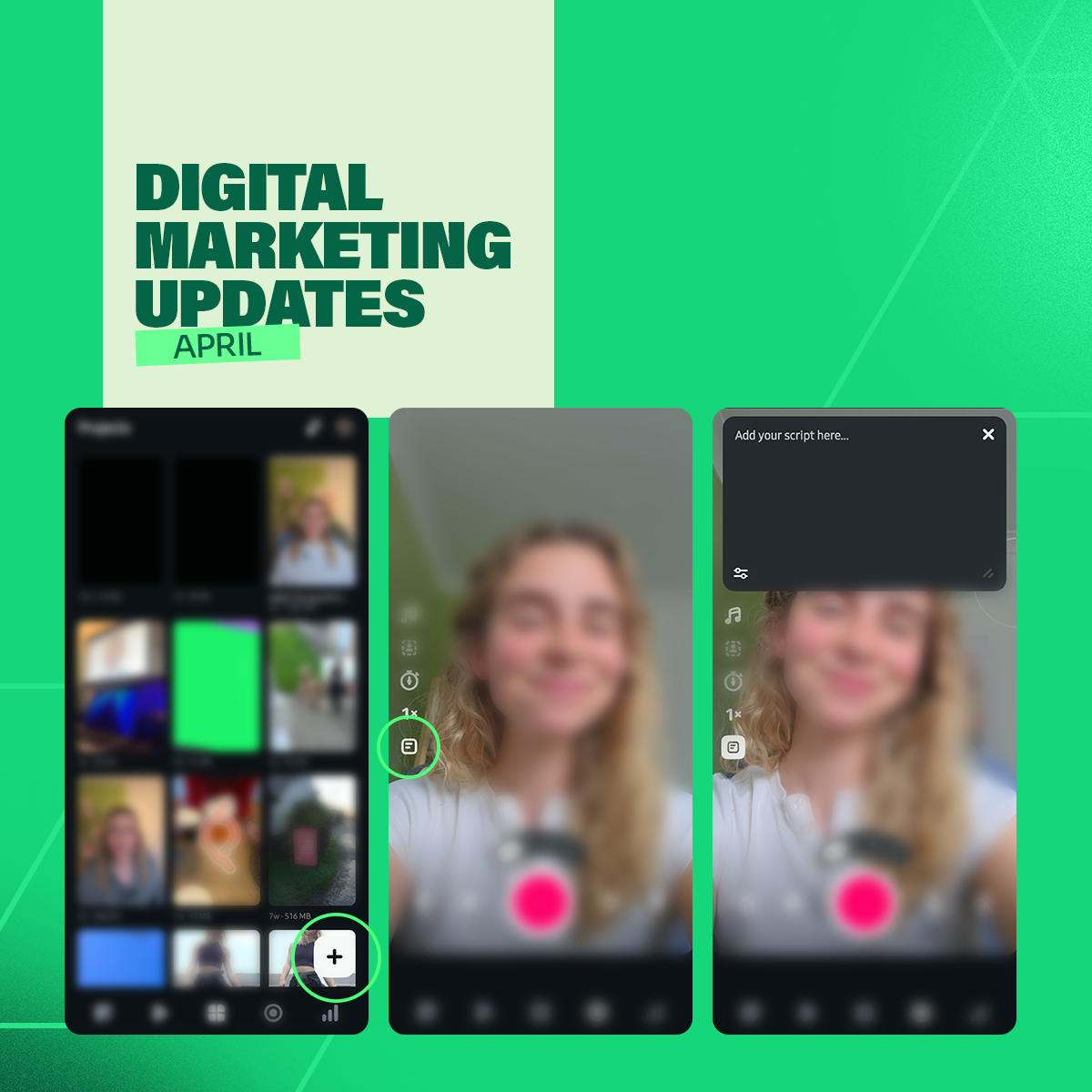
Edits continues to close the gap on dedicated editing tools like CapCut, with new features like an in-app teleprompter making content creation more accessible. This allows creators and businesses to deliver talking-head style videos while maintaining direct eye contact with the camera, removing one of the biggest friction points in filming.
The result is a more natural, confident delivery without the need for multiple takes or external tools. As these features become more integrated, the barrier to producing polished, engaging video content continues to drop, making it easier for brands to show up consistently across social platforms.
The new rules of local search in an AI-driven world
April 2026, SEO & AI Update
Amira Bird
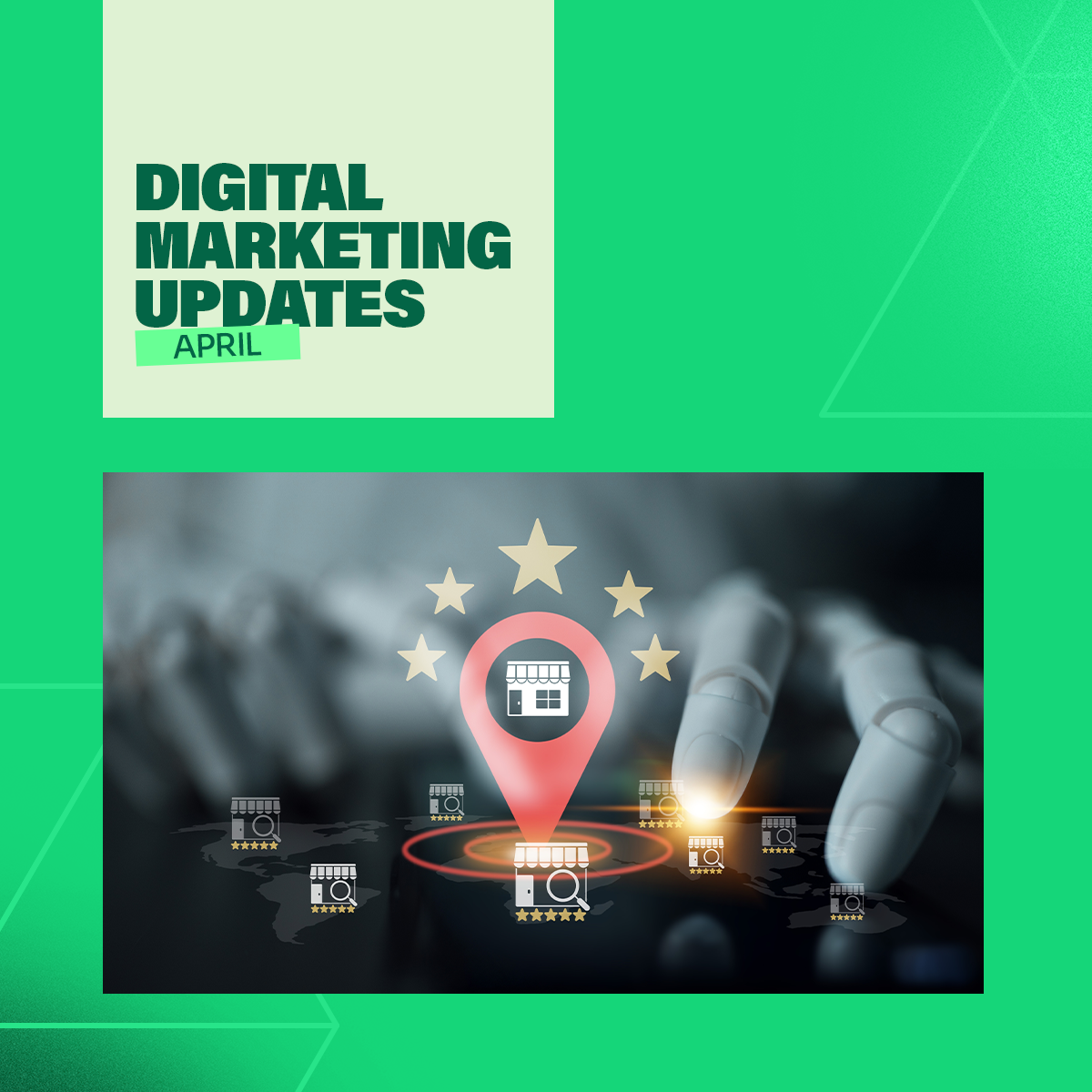
Local search is quickly shifting from a “click to find out” experience to an “answer on demand” one, powered by AI. Features like conversational prompts in maps and in-platform business chat mean users can now get what they need, whether that’s opening hours, services, pricing, or suitability, without ever visiting a website.
It’s no longer just about ranking, but about being the most accessible and understandable source of information. To stay competitive, brands need to structure their content around real customer questions, ensuring key details are clearly surfaced, easy to interpret, and aligned with how people naturally search.
To build this effectively, brands should source FAQs from real customer touchpoints, including website pages, Google Business Profile Q&As, reviews, social media interactions, and customer service conversations, rather than relying on SEO assumptions alone.
The shift from content volume to content authority
April 2026, AI & Content Update
Amira Bird
Content has become easier than ever to produce with AI. The real point of difference is no longer volume, but originality and expertise. Both search engines and audiences are placing greater value on content backed by real insights, whether that comes from interviews, first-hand experience, or genuine market research. This shift means brands that invest in professional knowledge and unique perspectives are more likely to stand out across SEO, GEO-targeted content, and broader digital promotion.
As AI-generated content continues to introduce inaccuracies and “hallucinations,” trust becomes harder to earn and easier to lose. Your brand can stand above this with original research, whether through new data or unique insights, to give audiences and search systems something reliable to reference. This positions your brand as a source rather than a contributor, increasing the likelihood of being surfaced for relevant queries and strengthening long-term authority.
Instagram Edits starts to play
March 2026, Social Media Update
Amira Bird
Instagram’s Edits video editor launched last year (see more in our digital marketing updates 2025 blog) and has spent this time catching up with CapCut.
Now, finally, we have started to see new features come out to play.
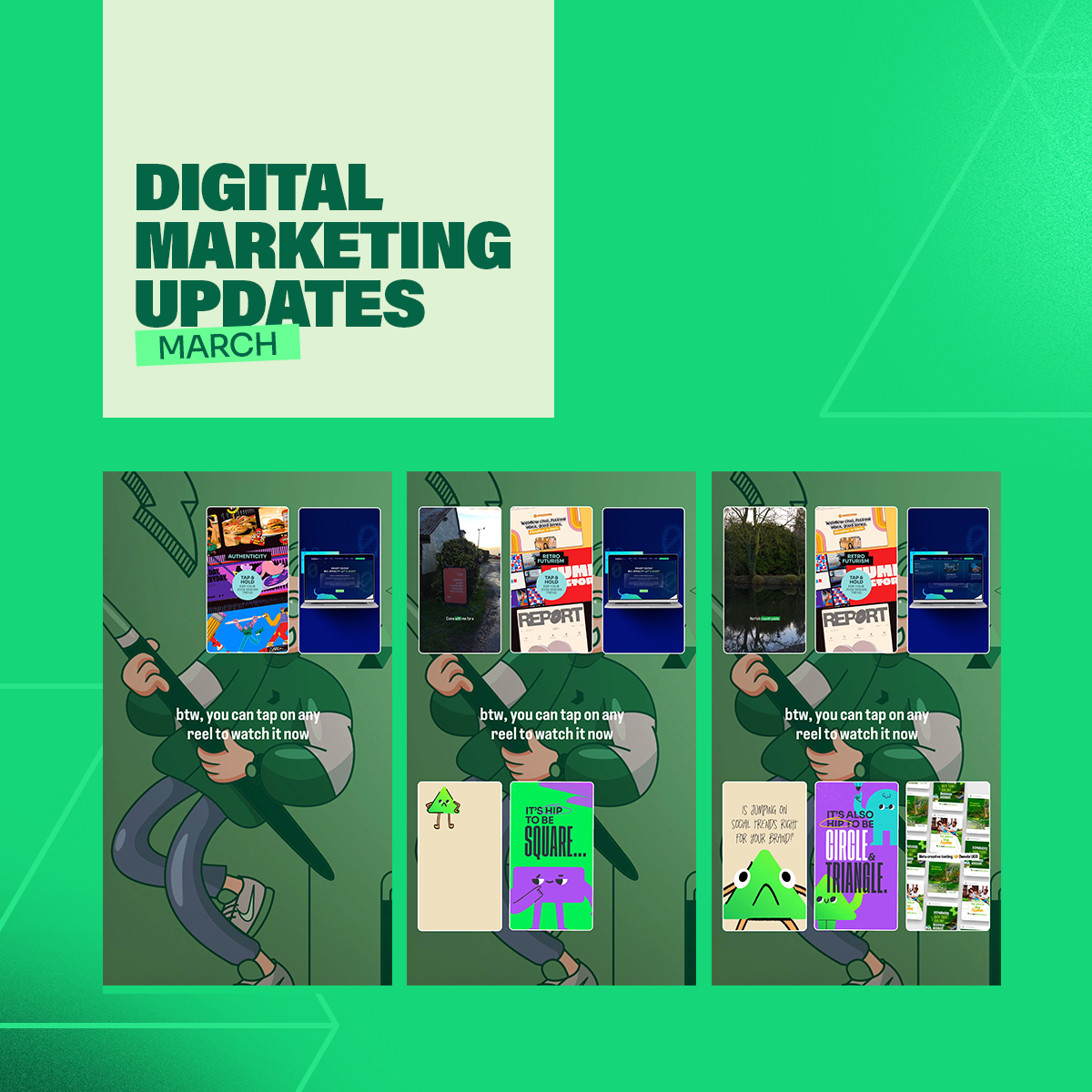
It didn’t take long for creators to work out that they can use Edit’s new link feature to create a reel that points to all their top reels, with the option for viewers to go straight to each one.
Still free to use, Edits offers an opportunity for creators and businesses to push their reach further on Instagram and Facebook (Edits videos getting a natural boost from the algorithm).
We’re excited to see where this goes now they aren’t just playing catch up.
The next evolution of WordPress: AI-powered websites
March 2026, Website & AI Update
Amira Bird
WordPress has released new integration plugins that connect websites directly to leading AI models such as OpenAI, Google Gemini and Anthropic Claude. While this might sound technical, the real shift is structural.
WordPress is building the infrastructure that allows developers and plugins to plug AI directly into the CMS.
In practice, this means AI capabilities like content drafting, SEO suggestions, accessibility improvements, alt text generation and internal linking can begin happening directly inside the WordPress editor rather than through external tools.
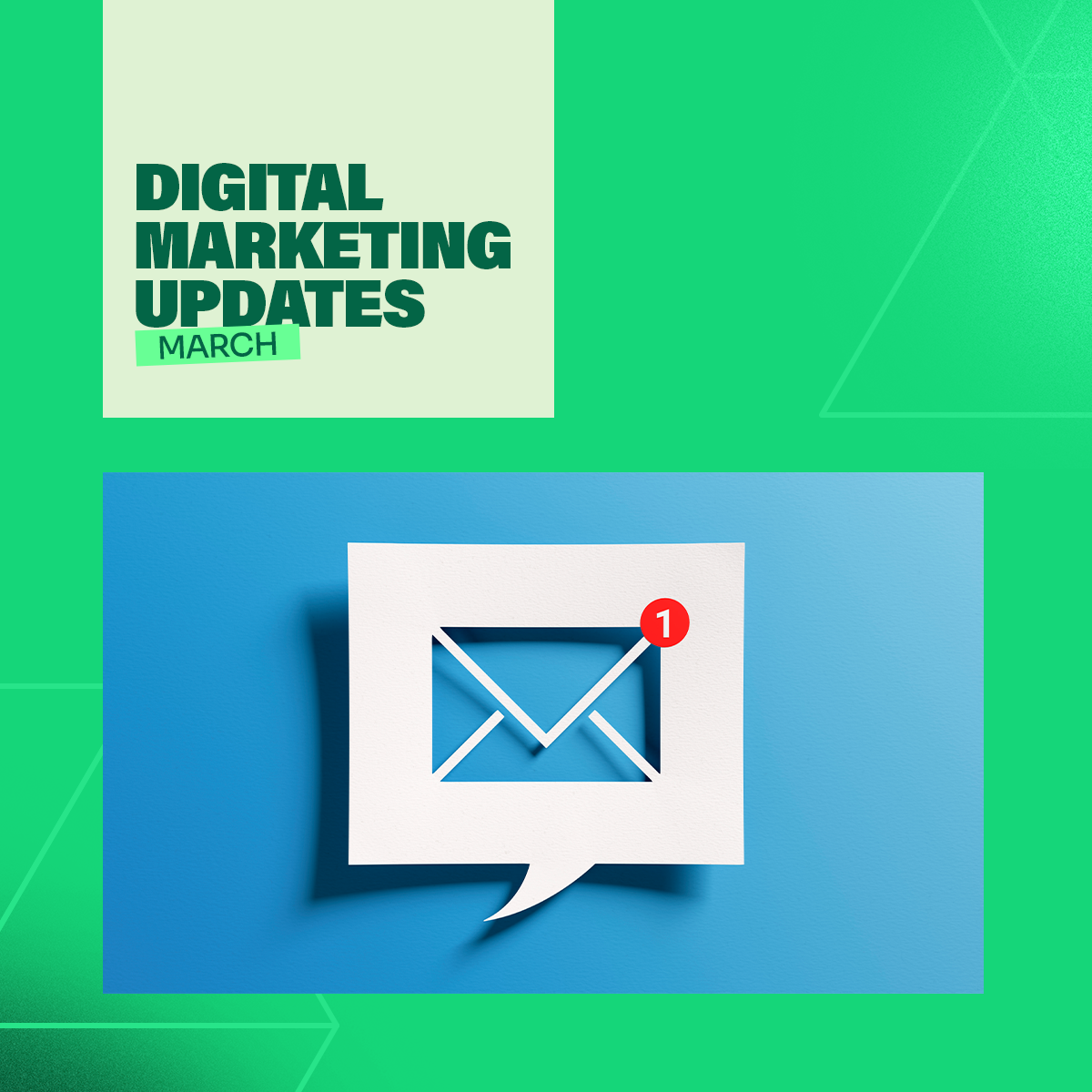
Why Email Marketing is Still Underrated in 2026
March 2026, Email Marketing
Email marketing rarely gets the spotlight. It’s not the shiny new marketing tactic making headlines or filling conference agendas. There’s no algorithm to hack or viral moment to chase. But that’s exactly why it remains so powerful. In a landscape where brands are increasingly dependent on platforms they don’t control, email continues to be one of the few truly owned channels.
And the brands that see results treat it as an ongoing system rather than a one-off campaign. Here’s a couple of steps to start building your email marketing strategy in 2026:
📬 Clean your email lists
Remove inactive contacts and keep your data healthy so your emails actually reach engaged subscribers.
📬 Segment your audience
Group subscribers by journey stage, behaviour, or customer type so your messaging feels relevant rather than generic.
📬 Identify what you can automate
Welcome emails, nurture sequences, and re-engagement flows can quietly build momentum in the background.
Email might not be the flashiest channel, but when it’s well maintained, it remains one of the most reliable ways to build long-term relationships with your audience ✉️
AI expands possibilities for graphic design
February 2026, Graphic Design Update
Mauricio Alves
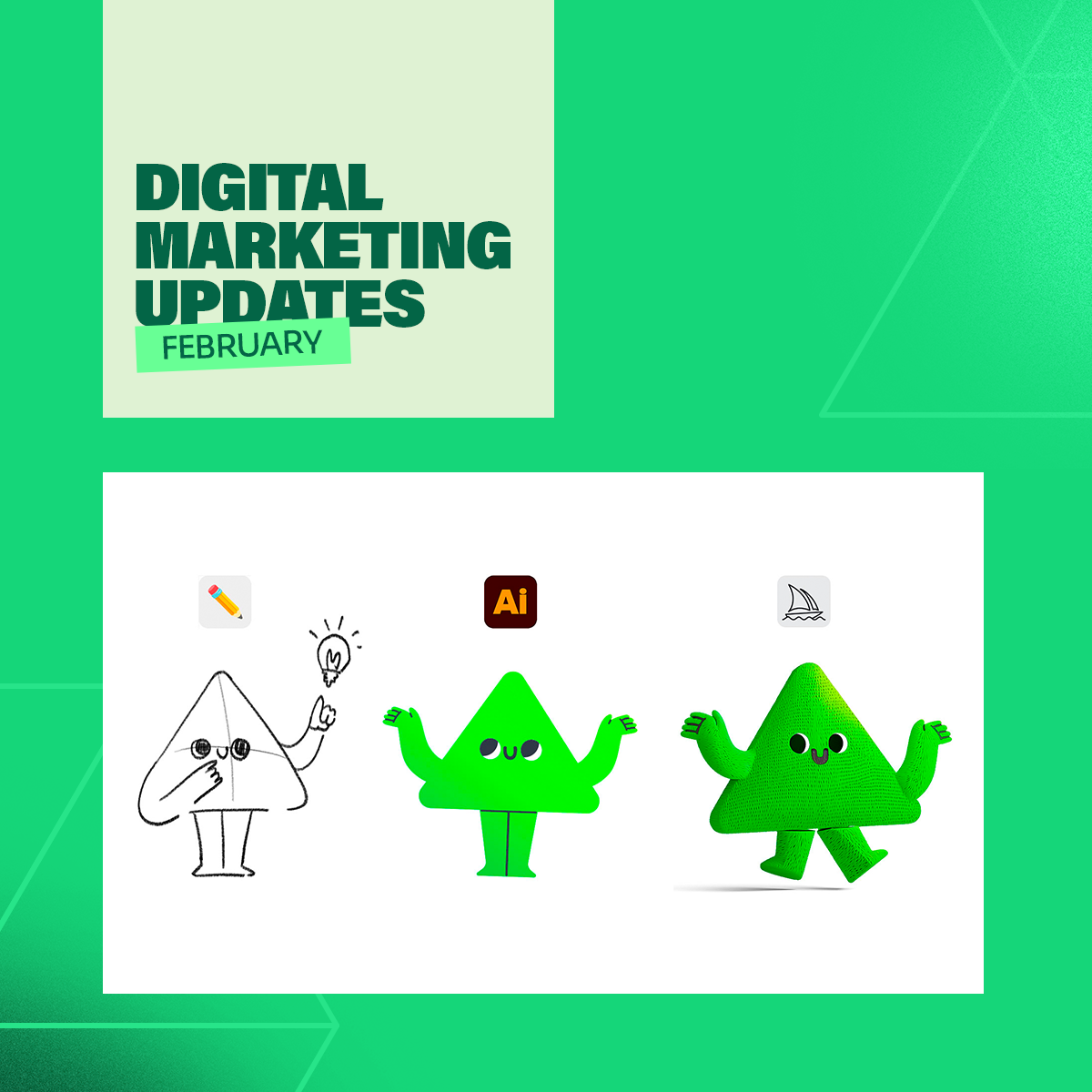
At Dweebi, we’ve been testing AI tools as a means to expand design possibilities and enhance creativity. Tools have always been a part of design evolution – from paper to digital, from vector to 3D. And artificial intelligence is no different.
With countless tools available, we’ve been testing to see how the strengths and limitations of each fit into our design process.
As with any new software, there is no fixed formula, only testing, adaptation and critical thinking. See our example of taking our Dweebies mascot beyond Adobe Illustrator to Midjourney to make it 3D with a crochet texture in our AI enhancing design blog.
Google Search Console’s new social channel insights
February 2026, Social Media & Search Update
Amira Bird
Google Search Console has introduced new social channel insights, giving marketers clearer visibility into how their social profiles and posts appear within Google Search and contribute to referral traffic. The reporting shows queries your social channels are appearing for, alongside searches that lead users directly to your profiles or content. It reflects Google’s broader move toward understanding digital marketing more holistically, with social signals and content now more visibly connected to search and AI-driven discovery journeys.
For social teams, this reinforces that posts are no longer purely short-lived, in-platform content. As social profiles and posts become more discoverable through search, their lifespan can extend well beyond the first engagement window and support ongoing visibility.
This positions social as part of a wider search ecosystem, where content can be surfaced through Google and AI search experiences as well as within the platforms themselves. The result is a shift toward creating social content with stronger evergreen value, clearer keyword alignment and a more integrated role within overall search strategy.
What the 2016 trend tells us about social media
January 2026, Social Media Update
Amira Bird
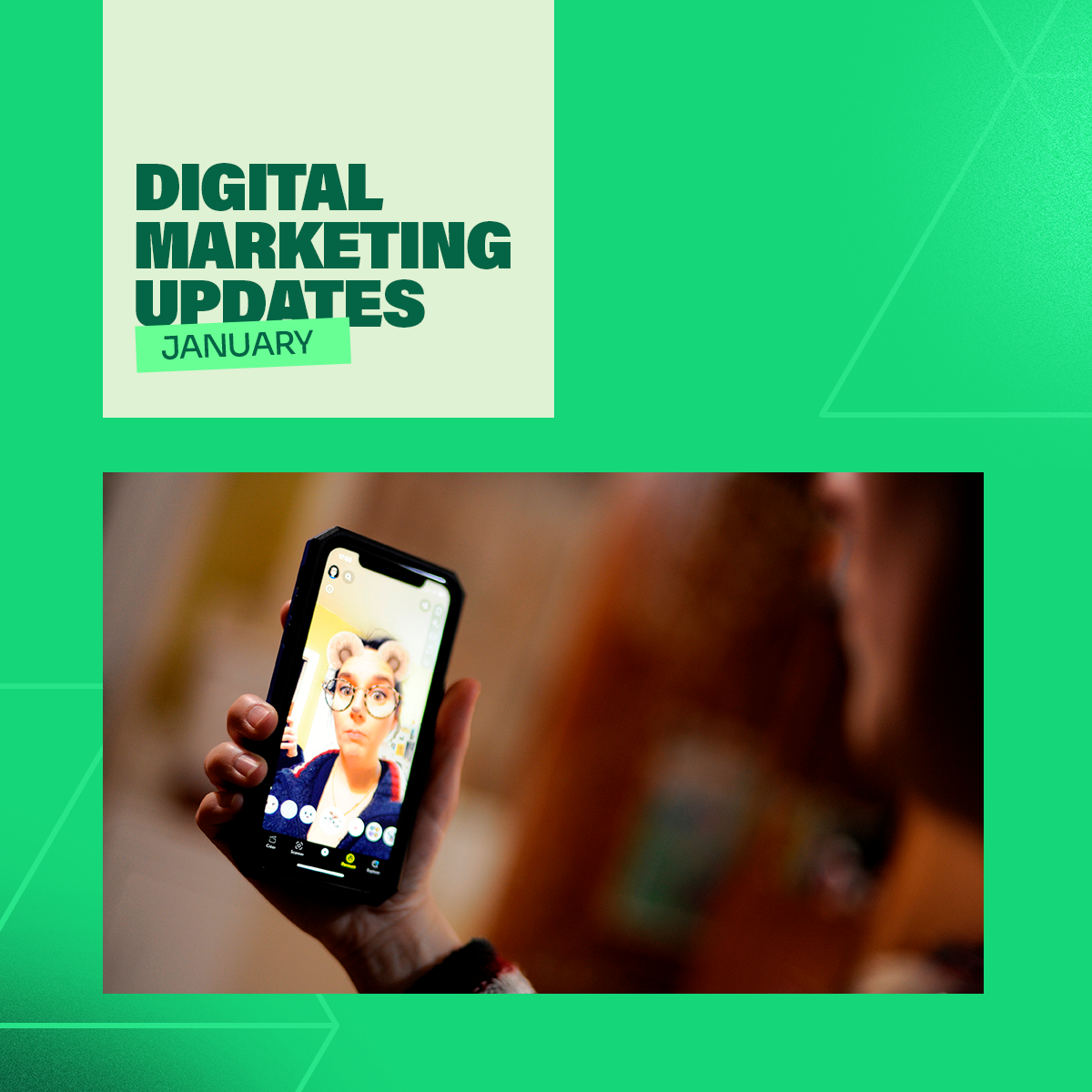
The recent 2016 nostalgia trend has exploded across TikTok, Instagram and X, with users declaring 2026 is the new 2016 and flooding feeds with throwback photos, decade-old filters, classic pop tracks and retro memes. What makes this more than just a fleeting hashtag is how deeply it taps into a shared longing for a simpler, less curated digital era. A time when social feeds felt more personal, raw and fun, before reels, AI content and algorithm-driven performance became dominant.
This wave of nostalgia isn’t merely about looking back. It’s a cultural moment that celebrates authenticity and emotional comfort through collective memory, making it one of the strongest and most widespread nostalgia trends we’ve seen online in years.
For businesses leaning into this, it can look like focusing on the human side of your business and bringing out authenticity for your business through behind-the-scenes, staff moments, process clips and casual posts that are less hard sells.
Google Marketing Suite Upgrades
January 2026, Reports & Insights Update
Amira Bird
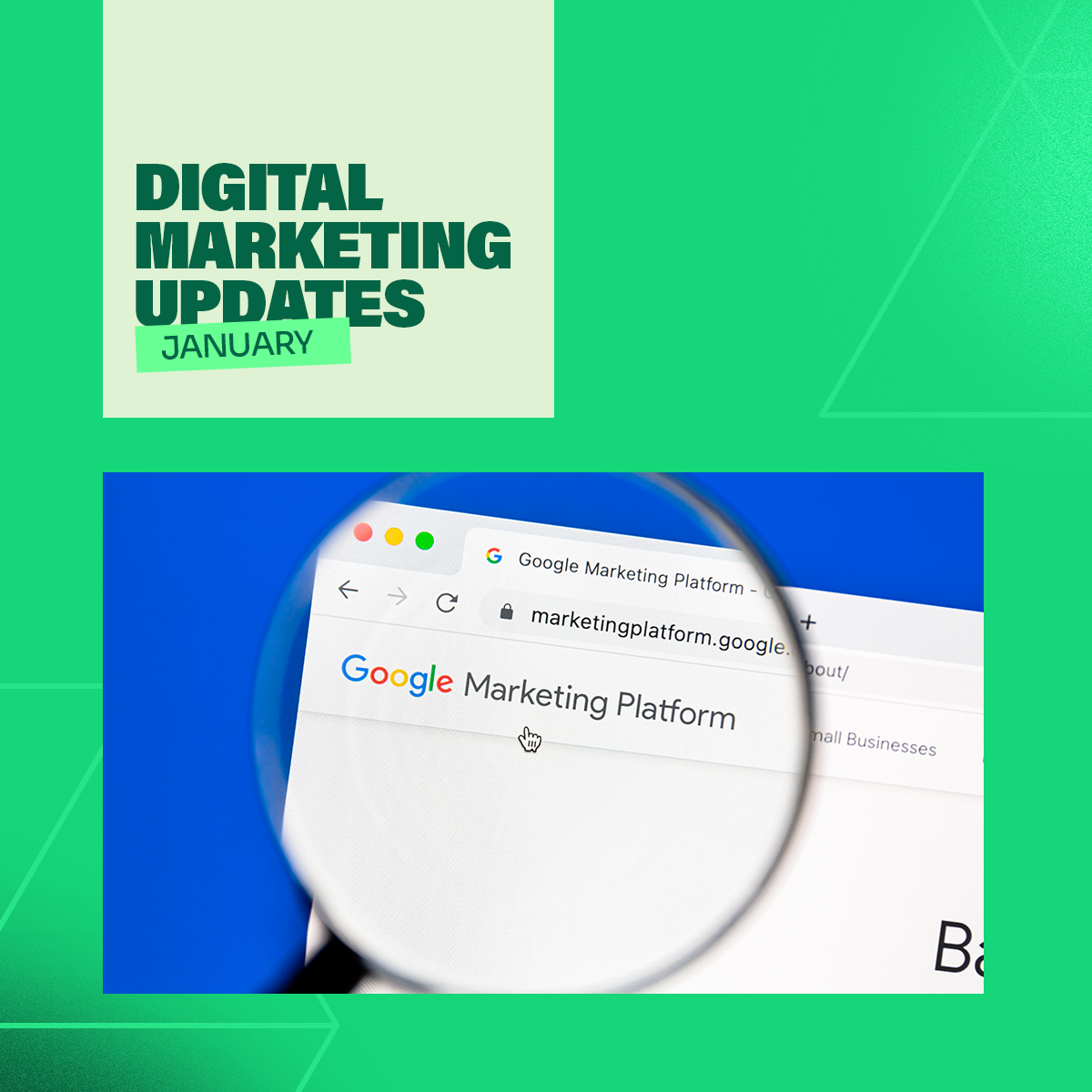
Last year we saw a (surprising) update to Google Search Console’s UI after years of no changes to the platform whatsoever.
We theorised these updates signalled incoming changes to reporting on AI searches. We are yet to see a robust reporting for AI searches beyond prompt scraping – which is expensive & ineffective in my opinion.
Now, Google has confirmed that data from Google’s AI Mode is included in the Search Console Performance report. While it’s not perfect in it’s reporting, and we are yet to see a specific AI Mode or Gemini report, it’s certainly a start.
On the flipside, Google has now integrated Gemini into Google Trends in an effort to aid research for search trends. It can help you compare data & get the bigger picture using the Trends Explore tool.
Ads for ChatGPT – We knew it was coming!
January 2026, AI Update
Amira Bird
ChatGPT has announced this month that they’re rolling out ads for free and Go accounts in the US (with other regions to follow). While he majority of paid subscriptions will remain ad-free, we all knew this was on its way.
While they dictate that ads will be clearly labelled as well as high-value for the search, we are yet to see what this means for advertisers to understand how we will be able to target particular topics or how the advertising is reported on.

read more!
recent posts

Construction Marketing: You’ve Outgrown Word of Mouth. What’s Next?
Word of mouth got you this far. Practical, Australia-specific construction marketing tactics for growing beyond referrals, for B2C and B2B.
Turning NDIS Digital Marketing Tactics into Strategy
Effective NDIS digital marketing isn’t about being seen more. It’s about being understood, trusted and chosen when it matters.
Balancing Accessibility & Compliance for NDIS Website Design
If you’re an NDIS provider, your website needs to not only be accessible but compliant with NDIS guidelines.