
Beyond Word of Mouth: A Construction Marketing Guide for Growing Businesses
There’s a point almost every construction business hits. You started small, did great work, and your reputation did the rest: one happy client told a neighbour, a builder recommended you to a mate, a project manager kept coming back for the next job. Word of mouth got you here, and there’s nothing wrong with that. It’s the best kind of marketing there is.
But at some point, that referral pipeline stops being enough to keep growing. You can only rely on so many happy past clients before the well runs a little dry, and if you want to keep scaling (more projects, bigger contracts, a fuller pipeline) you need people to find you who’ve never heard of you before.
That’s where marketing for construction companies comes in. And the good news is, it doesn’t mean becoming a different kind of business or throwing money at generic advertising. The tactics that actually move the needle depend heavily on who you’re trying to reach: homeowners and local clients (B2C), or architects, developers, and procurement teams (B2B), and the two require quite different approaches. Here’s where to focus first.
Clear & consistent branding
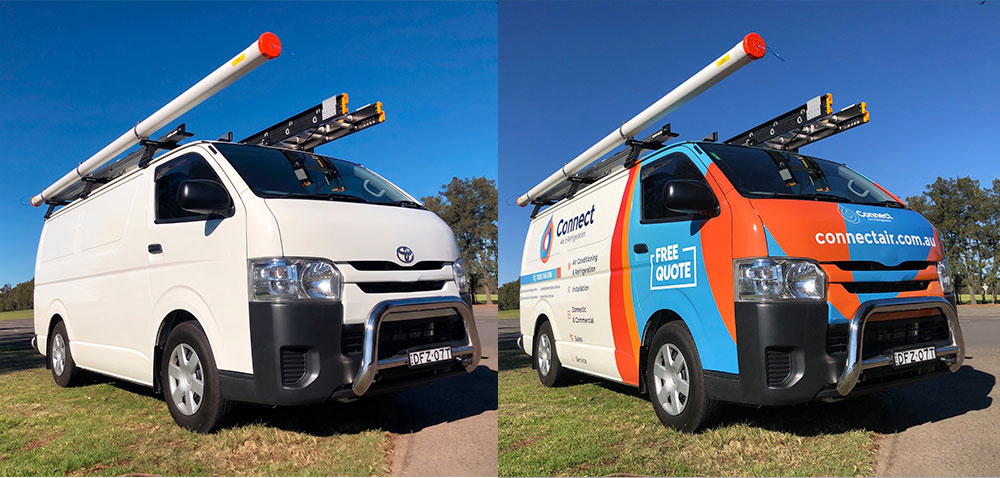
Before anything else, your branding needs to be doing its job everywhere your business shows up: your logo, your site signage, and (an often-overlooked one) your vehicles.
Branded vehicle wraps are one of the most cost-effective, high-visibility tools available to a construction business, and they’re frequently skipped in favour of flashier digital tactics. A single wrapped vehicle can generate somewhere between 30,000 and 70,000 impressions a day depending on location, simply by turning up to job sites, sitting in traffic, and being parked in driveways, and every one of those impressions is essentially free once the wrap is paid for. There’s also a trust factor: arriving at a client’s home or a commercial site in an unmarked ute or van reads as less professional than arriving in a properly branded one. For a construction business, a wrapped vehicle at a job site doubles as a mobile advertisement and an implicit endorsement, a stronger signal than almost any other form of local advertising.
The same consistency should carry through to site signage, hi-vis and uniforms, email signatures, and your website. None of this needs to be expensive, but it does need to be consistent; a different logo file, a slightly different blue, or an outdated tagline on different materials quietly undermines the professional impression you’re trying to build.
Showcasing your work
Construction is a visual industry, and yet many businesses in the sector are sitting on years of finished projects that never make it further than a phone camera roll.
Case studies and testimonials do more heavy lifting than almost any other content type. A short write-up of a completed project (the brief, the challenge, what you delivered, and a client quote) on your website gives prospective clients tangible proof you can do what you say you can. This applies whether you’re targeting homeowners deciding between builders or a procurement team assessing a shortlist of contractors.
The foundation underneath all of this is photography and videography. Good, consistent project photography (before/after where relevant, plus in-progress shots) is what makes case studies, your website, your social media, your Google Business Profile, and even your capability statements actually work. It’s worth treating as a standing part of every project, a quick photo pass at key milestones, rather than an afterthought once the job’s finished and the site’s been cleared. Short-form video is increasingly part of this too: quick site updates, time-lapses, or behind-the-scenes clips of your team at work build familiarity and trust in a way that static photos alone don’t.
Local SEO, Google Business Profile & reviews
(For homeowner & local clients)
If your clients are homeowners or local businesses searching for a builder, renovator, or trade in their area, this is where the highest-return, lowest-cost work lives.
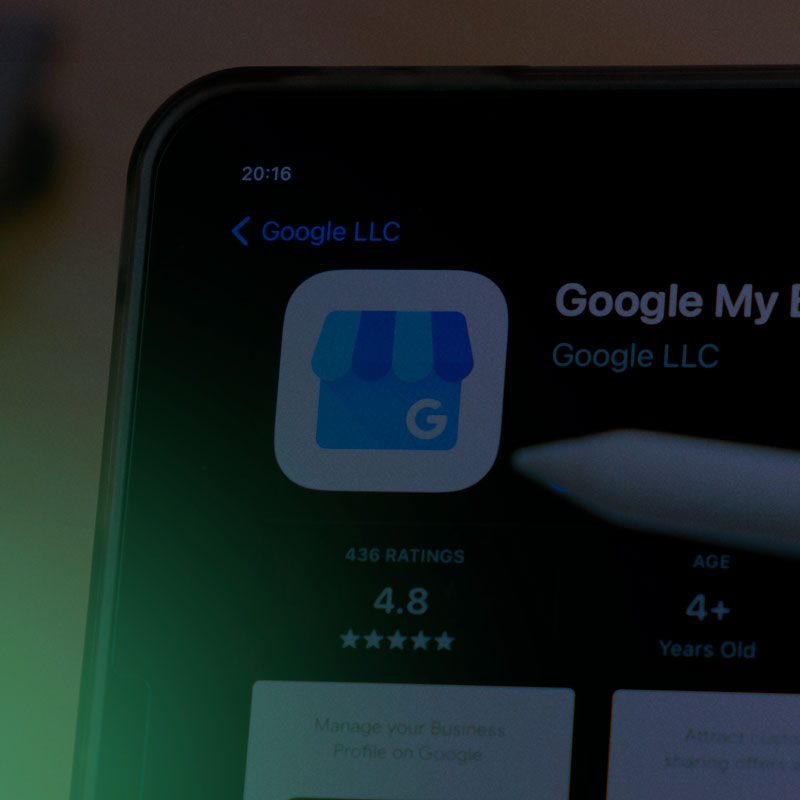
When someone searches “builder near me” or “renovation company [suburb],” the three results in Google’s local map pack capture a disproportionate share of clicks, far more than the organic results below them. Getting into that map pack, and staying there, comes down to a well-optimised Google Business Profile: accurate categories, complete service and area listings, regularly uploaded project photos, and a steady flow of genuine customer reviews with owner replies.
Reviews specifically carry real weight. Google uses review volume and recency as a ranking signal, and it also happens to be exactly what a homeowner is looking at before they decide to call. A profile with a strong, current run of five-star reviews consistently outperforms one with none, both in ranking and in click-through. The habit that works best here is simple: ask for a review right after a job wraps up, while the client’s still happy and the work is fresh in their mind.
This is also where local SEO on your website matters: service-area pages for the suburbs or regions you actually cover, rather than one generic “our services” page trying to rank everywhere at once.
Google Ads
(For homeowner & local clients)
Local SEO takes time to build. Google Ads is the fastest way to sit in front of someone who’s searching for a builder or tradesperson right now.
For Australian construction and trade businesses, monthly ad spend typically sits somewhere between roughly $500 and $3,000, with cost-per-click varying widely by trade and location, and cost-per-lead commonly landing in the $30 to $200 range depending on competition. The key to making it work is sending clicks to a dedicated landing page, not your homepage, with clear service and location information, proof of licensing and past work, and an obvious way to get in touch. Poorly targeted campaigns (broad match keywords, no negative keyword list, generic landing pages) are the most common way construction businesses waste ad spend, so it’s worth setting up properly or working with someone who has experience specifically in the sector.
Capability statements
(For tenders & commercial clients)
If your business works with developers, main contractors, or government and commercial clients, capability statements do the job that case studies and Google Ads do for homeowners.
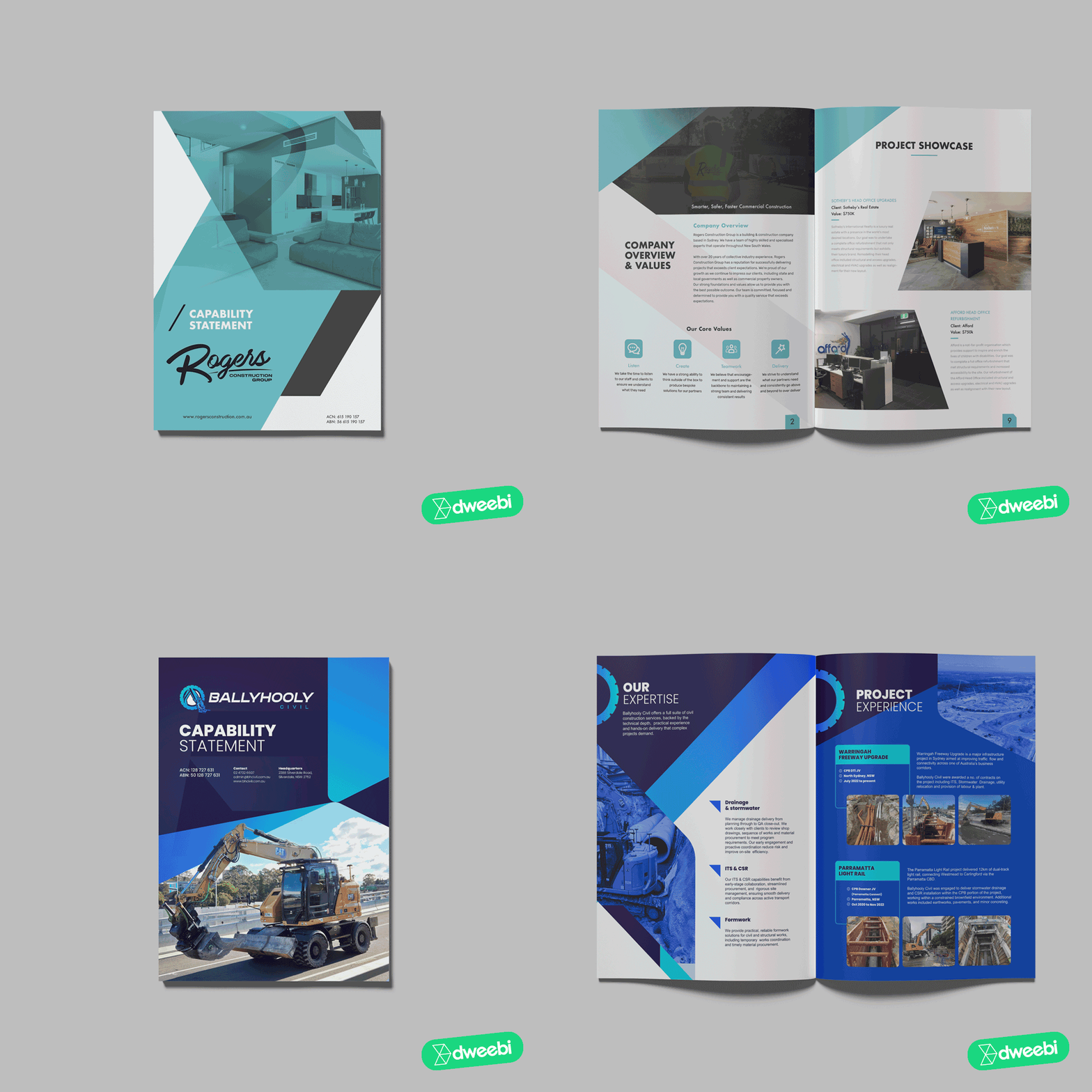
A capability statement is a focused document, typically 4 to 8 pages, that sets out your core services, experience, accreditations, and past project examples, built specifically to help a procurement officer or main contractor quickly assess whether you’re the right fit for a tender or project. Some run to around 12 pages where a business wants to showcase a broader range of projects, introduce their team, and cover community involvement. Decision-makers reviewing multiple submissions are often working under time pressure, so a well-structured, visually professional capability statement can be the difference between standing out and being overlooked. Design matters here as much as content; a document that looks polished and is easy to scan signals credibility before a procurement team has read a word of it.
If you’d like a deeper look at what to include and how to structure one, we’ve written a full guide to creating a construction company capability statement.
Website design
Your construction company website is where every other tactic on this list ultimately points. Someone who’s seen your vehicle wrap, read a Google review, or clicked a Google Ad will almost always check your website before getting in touch, and if it’s slow, outdated, or unclear about what you actually do, all that other work goes to waste.
A website that’s doing its job for a construction business needs to make three things obvious within seconds: what you do, where you do it, and how to get in touch. Beyond that, it’s the natural home for your case studies, project gallery, and (for B2B-facing businesses) your capability statement, and it needs to work properly on mobile, since a large share of both homeowner searches and on-the-go enquiries happen from a phone.
Where to start
You don’t need to tackle all seven of these at once, and you don’t need a marketing department to make progress. If your business serves homeowners and local clients, local SEO and your Google Business Profile are usually the best place to start; it’s largely free, and it’s exactly where your next client is already looking. If you’re working toward tenders and commercial contracts, a strong capability statement and consistent case studies will do more for you than almost anything else.
Wherever you start, the goal is the same: give your reputation somewhere to be found by people who don’t know you yet.
Ready to build out your construction marketing beyond word of mouth? Get in touch with the Dweebi team. We work with construction businesses across residential and commercial sectors on everything from capability statements to local SEO and website design.
Frequently asked questions
How do I market a construction business?
Start with the fundamentals that build trust and visibility: consistent branding across your vehicles, site signage, and website; visible proof of past work through case studies, testimonials, and photography; and a Google Business Profile that’s complete and gathering reviews. From there, layer in Google Ads for faster homeowner leads, or capability statements and LinkedIn presence if you’re chasing tenders and commercial contracts.
How much do construction companies spend on marketing?
It varies widely depending on your size, target audience, and the mix of tactics you use. For paid channels like Google Ads, Australian construction and trade businesses commonly spend somewhere between $500 and $3,000 a month. Tactics like local SEO, Google Business Profile management, case studies, and organic social carry lower ongoing costs but take longer to build momentum.
How do I choose a marketing agency for a construction company?
Look for an agency with genuine construction or trade-sector experience, since the tactics that work for this industry (capability statements, local SEO for tradies, vehicle branding, project photography) differ from generic small business marketing. Ask to see examples of past construction clients, and check they understand the difference between marketing to homeowners (B2C) and marketing to tender or procurement audiences (B2B).
How is marketing different for a small construction business compared to a large one?
The tactics are largely the same, but the starting point differs. A smaller, homeowner-facing business usually gets the fastest return from local SEO and a strong Google Business Profile, since that’s free and directly matches how local clients search. A larger business chasing commercial or government contracts will get more value from a polished capability statement and consistent project case studies, since those are what procurement teams actually assess.

read more!
recent posts
Turning NDIS Digital Marketing Tactics into Strategy
Effective NDIS digital marketing isn’t about being seen more. It’s about being understood, trusted and chosen when it matters.
Balancing Accessibility & Compliance for NDIS Website Design
If you’re an NDIS provider, your website needs to not only be accessible but compliant with NDIS guidelines.
How to Create a Construction Company Capability Statement
Learn what makes a construction company capability statement clear, professional, and visually effective to make a strong first impression.